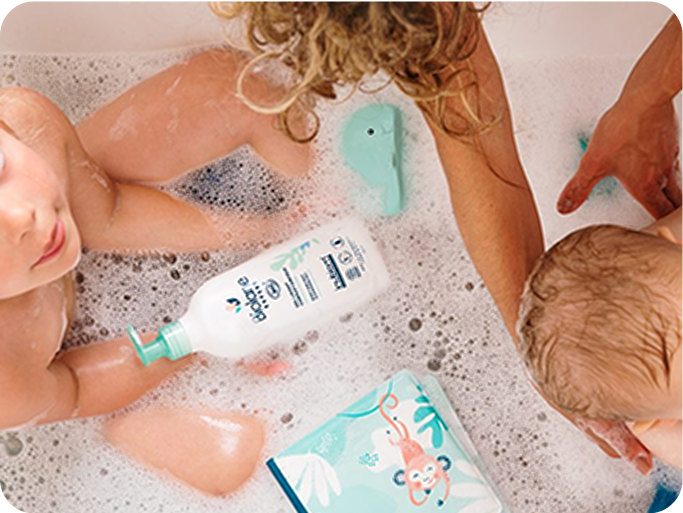
Parent bathing a baby with Biolane gentle bath products

How to Give Your Baby a Bath: A Step-by-Step Guide

Quick answer: Bathe a newborn two to three times a week in about 5 to 8 cm of water at 37 °C, in a room around 25 °C, for five to ten minutes, using a tear-free, pH-balanced cleanser that is suitable from birth. Pat dry and moisturise while the skin is still slightly damp.

  • Three baths a week is enough in the first months; wipe face, folds and diaper area on other days.
  • Check the water with a thermometer or your elbow: it should feel neutral, neither warm nor cool.
  • Never leave your baby alone in or near the water, even for a second.

Bath time worries many new parents, and it raises a lot of questions. How warm should the water be? How often does a newborn actually need a bath? What if my baby cries? The good news is that with a little preparation, bathing your baby becomes one of the calmest, most enjoyable moments of the day: a few minutes of warmth, skin contact and undivided attention that your baby will come to love.

This guide walks you through how to bathe a newborn step by step, from setting up the room to drying and moisturising afterwards, with tips adapted to the warm, humid climate we live with in the Philippines.

Why bath time matters

A bath does more than clean. It is a moment of relaxation and exchange between you and your child. The warm water soothes, your voice and touch reassure, and a regular routine helps your baby learn the rhythm of the day. Many families use the evening bath as the signal that bedtime is coming.

Morning or evening does not really matter. Choose the time of day when you are least rushed and your baby is calm, and try to keep it consistent. The more often you do it, the more comfortable you will both feel.

How often should you bathe a newborn?

In the first few months, three baths a week is generally enough. A newborn's skin is thin and still building its natural protective barrier, so daily baths with soap can dry it out. On non-bath days, a gentle wipe-down of the face, neck folds, hands and diaper area is all that is needed.

In the Philippine heat, babies sweat more, so you may prefer a quick rinse with plain water on very hot days and a full bath with a gentle cleanser every second day. Either way, bathe before a feed or well after one, so that the bath does not interfere with digestion.

Preparing the bath

Organisation, precaution and safety are essential. Set everything up before you undress your baby, so you never have to step away.

  • The room: keep it draught-free and comfortably warm, around 25 °C. If you use air-conditioning, switch it off or turn it down while the bath runs.
  • The tub: a baby bathtub on a stable surface, or a free-standing tub placed in the shower, both work well. A folded towel on the bottom stops slipping.
  • The changing area: ideally in the same room, with the towel, clean diaper, clothes and skincare within arm's reach. Your baby should never be left alone on the changing table or in the water, not even for a second.
  • The water: fill the tub to about 5 to 8 cm and aim for 37 °C. Check with a bath thermometer or dip your elbow in: if it feels neither hot nor cold, it is right. Only undress your baby once the bath is ready, so they do not get cold.

Choosing gentle bath products

A baby's skin is particularly fragile and sensitive, so the products you use matter as much as the technique. Look for a cleanser that is pH-balanced, does not sting the eyes and is suitable from birth. A 2-in-1 formula for body and hair keeps things simple when you have one hand holding a wriggly baby.

The Biolane Baby Body & Hair Wash Gel is made with 97% natural-origin ingredients, is clinically tested under medical supervision and is suitable from birth. Its super-fatting agent helps prevent the dryness that frequent washing can cause. For babies with a little more hair, the Biolane Gentle Shampoo cleanses and detangles fine hair and is specially designed not to sting the eyes. You will find the full range of washes and shampoos in our Bathtime collection.

Because our climate is humid and babies sweat, rinse thoroughly, especially in the neck, armpit and thigh folds where residue and moisture can collect.

Step by step: bathing your baby

1. Undress and lower gently

Undress your baby, remove the diaper and clean the diaper area first if it is soiled. Cradle the head and neck on your forearm with your hand holding the far shoulder and upper arm, and use your other hand under the bottom. Lower your baby feet first, slowly, talking softly the whole time.

2. Start with the face

With a soft cloth and plain water, wipe the eyes from the inner corner outwards, then the face and behind the ears. No cleanser is needed on the face.

3. Wash from top to bottom

Pour a small amount of wash gel into your palm, lather lightly and wash the neck, chest, arms and hands, then the tummy, legs and feet. Pay attention to the skin folds. Wash the diaper area last.

4. Hair and scalp

Wet the hair with a cupped hand of water, massage a drop of shampoo gently over the scalp, then rinse by tipping the head slightly back so water runs away from the eyes.

5. Keep it short

Five to ten minutes is plenty. The water cools quickly and a long soak dries the skin. If your baby starts to shiver or fuss, it is time to get out.

After the bath: drying and moisturising

Lift your baby out and straight onto the towel. Pat dry rather than rubbing, taking care with the folds of the neck, armpits, groin and behind the knees. Damp skin folds in a warm climate are where irritation starts.

While the skin is still slightly damp, apply a moisturiser to lock in hydration. The Biolane Moisturizing Body Milk is formulated with 98% natural-origin ingredients and gives a proven 62% increase in hydration eight hours after application, which makes it a good daily choice for the whole body. Finish with a clean diaper, dress your baby in light cotton and enjoy a cuddle.

Safety reminders

  • Never leave your baby unattended in or near water, even for a moment.
  • Keep one hand on your baby at all times.
  • Check the water temperature every time; hot water taps can be unpredictable.
  • Keep the room warm and the bath short.
  • Wait for the umbilical cord stump to fall off and heal before full immersion baths; use sponge baths until then.

Frequently asked questions

Can I bathe my newborn every day?

You can, but you do not need to. Three baths a week is enough in the early months. If you bathe daily because of the heat, use plain water most days and a gentle cleanser only every second or third bath, and always moisturise afterwards.

What water temperature is safe for a baby bath?

Around 37 °C, close to body temperature. Use a thermometer or the elbow test: the water should feel neutral, neither warm nor cool.

What if my baby cries in the bath?

Most babies settle after the first few baths. Make sure the room and water are warm enough, keep your baby's body partly covered with a warm wet cloth, hold them securely and talk or sing. If crying persists every time, try bathing at a different time of day, when your baby is fed, rested and calm.

This article is for general information only and is not medical advice. If your baby's skin does not improve, or you notice fever, blistering, oozing or spreading rash, consult your pediatrician.

Back to blog